logo
  • Home
  • His life ...
    • Biography
    • Curriculum Vitae
    • Book: “Maximilien au Désert” NEW !
  • His work ...
    • Books
    • Expos
    • Painting
    • Embossings
    • New Year's wishesNEW !
    • Online ExhibitionsNEW !
    • Slideshows
  • Media ...
    • Documentation
    • Videos
    • Contact
  • Photo Gallery ...
    • All Photos
    • -
    • Sahara Rock Art completed
    • Tuareg
    • Pueblos
    • Northwest Indians
    • Peru
    • The culture of the Incas
    • Pre-Inca cultures
    • The Andes
    • Argentina
    • Gauchos
    • Central America
    • Sahara 1962-1975
    • Sahel
    • Sahara : Tassili - Tadrart 1993
    • From the Ténéré to the Aïr Mountains
    • In the dunes of Erg Izane
    • Across the Tamgak Mountains
    • From Adrar Bous into the Tamgak Mountains
    • With the Tuareg on the edge of the Tamgak Mountains
    • Building a Tataram: Documentation
    • The Spice Route – Spices NEW !
    • The Spice Route – Java and Sulawesi NEW !
    • The Spice Route – Moluccas NEW !
    • The Spice Route – Malaysia, Singapore and Sri Lanka NEW !
    • The Spice Route – India : Kerala, Goa and Mumbai NEW !
    • The Spice Route – India: Rajasthan NEW !
    • The Spice Route – Africa – Europe NEW !
  • Comments
    flag flag flag flag    

Description

  • Foto Number: 42N-273-03

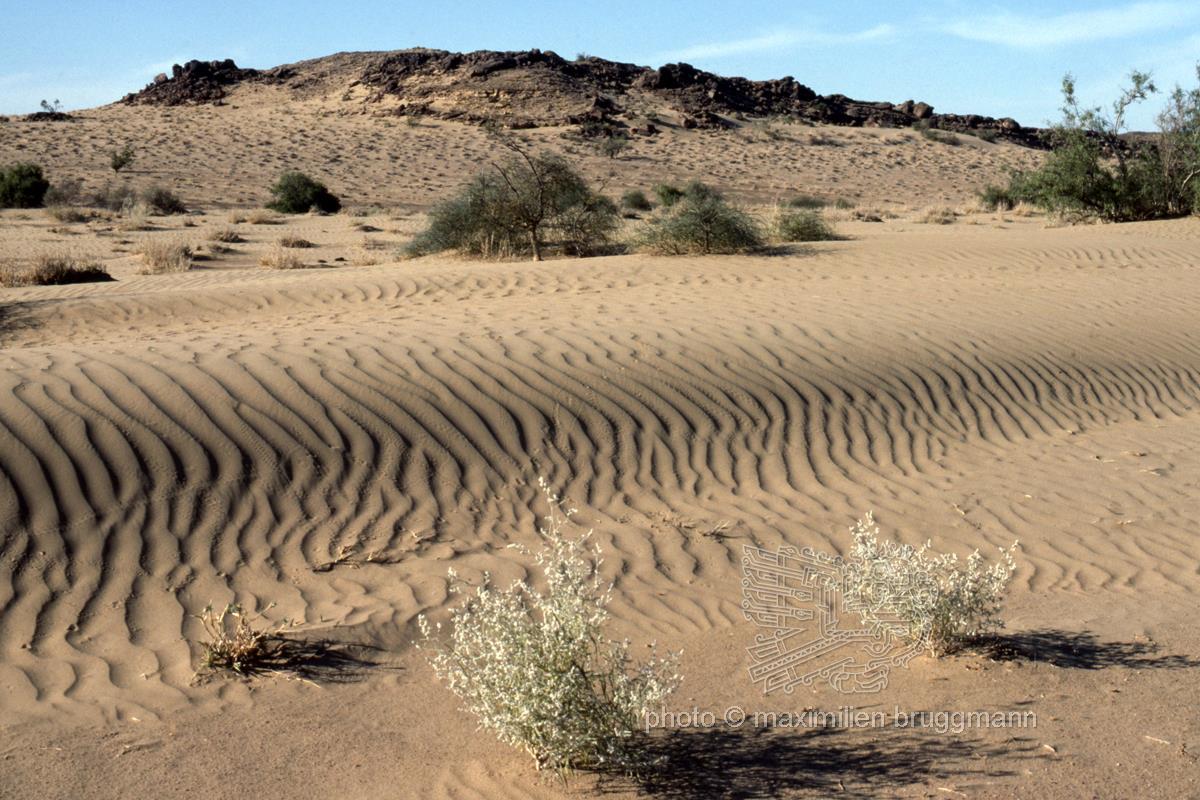
The Thar Desert stretches largely across the Indian state of Rajasthan and parts of Pakistan, and is known for its combination of various desert landscapes. The eroded, rocky hill in the background (Bhakars) is characteristic of the foothills and isolated ridges that repeatedly break through the sandy plains of the Thar. The pronounced wind ripples on the undulating dunes in the foreground reflect the sandy habitats that characterize large parts of the region. The sparse shrubs and grasses in the sand represent the typical xerophytic (drought-resistant) flora of the Thar, such as thorny shrub species (Capparis decidua or Acacia). These deep-rooted plants also serve as important soil stabilizers against wind erosion. – 1990
  • Keywords:
    Asia India Rajasthan Jaisalmer Thar (desert) sand dune Spice Route-F Spice Route

Description

  • Foto Number: 42N-273-03

The Thar Desert stretches largely across the Indian state of Rajasthan and parts of Pakistan, and is known for its combination of various desert landscapes. The eroded, rocky hill in the background (Bhakars) is characteristic of the foothills and isolated ridges that repeatedly break through the sandy plains of the Thar. The pronounced wind ripples on the undulating dunes in the foreground reflect the sandy habitats that characterize large parts of the region. The sparse shrubs and grasses in the sand represent the typical xerophytic (drought-resistant) flora of the Thar, such as thorny shrub species (Capparis decidua or Acacia). These deep-rooted plants also serve as important soil stabilizers against wind erosion. – 1990

  • Keywords:
    Asia India Rajasthan Jaisalmer Thar (desert) sand dune Spice Route-F Spice Route

Website © 2026 pb + StratLabs
Copyright © Estate of Maximilien Bruggmann for all photos. Any use for commercial purposes prohibited.
flag flag flag flag