Description
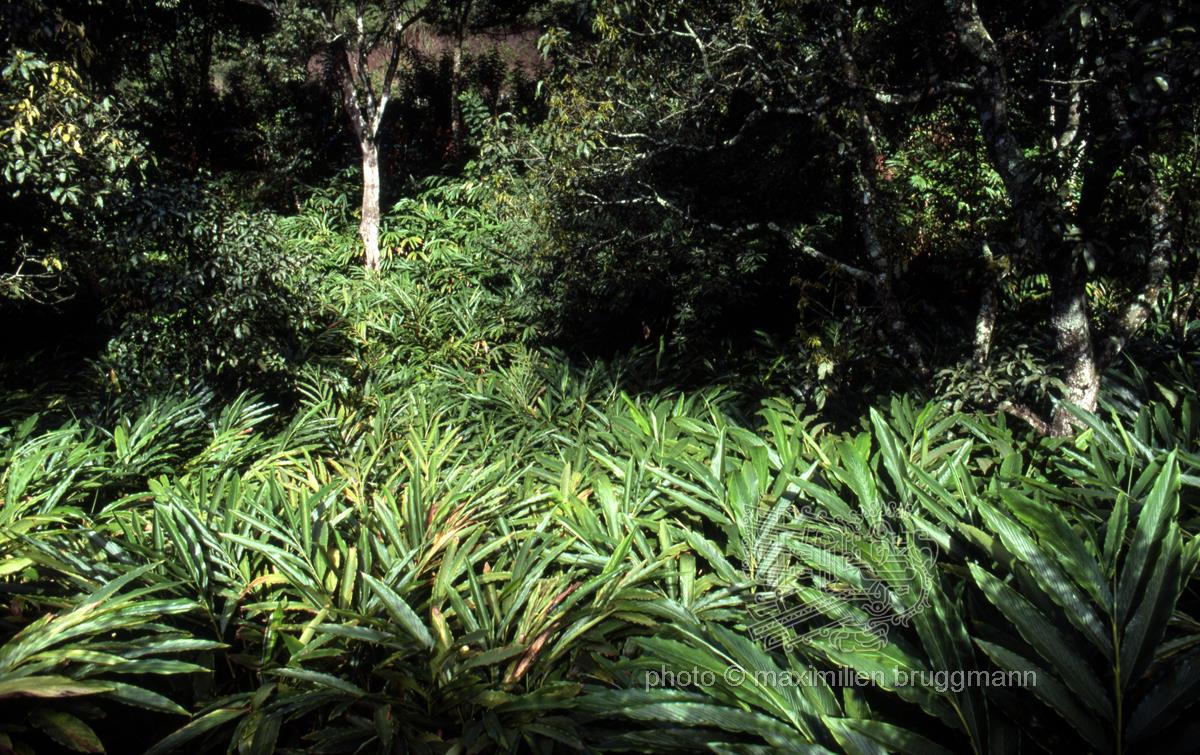
Cardamom fields cover the mountains of the same name, which stretch inland for over 300 kilometers along the Malabar Coast in the Indian state of Kerala. Like most spices, cardamom requires a very hot and humid climate. It grows best in humus-rich soil in the shade of large evergreen trees. It prefers marshy locations and even proximity to a watercourse. The underground rootstock is a tuberous rhizome with fleshy roots from which reed-like above-ground stems grow. Each of these produces lance-shaped, 30-centimeter-long sheathing leaves. This term refers to leaves that partially envelop the stem on which they grow. Other, shorter stems bear small flowers at their base. These are greenish-white or purplish-violet and grow near the ground in two or three clusters, varying in length between 20 and 50 centimeters. When ripe, these flowers form egg-shaped fruits or capsules. - 1990