South America’s highest mountain range, characterised by volcanoes, arid conditions and indigenous cultures.
8 results
Vase in the shape of a kneeling figure from the Vicús culture, northern Peru. Vicús is regarded as a phase of experimentation, chronologically classified as a late phase of the Formative Period, as a wide variety of forms and technical solutions appear in pottery. Private collection, Lima, Peru. - Book: Picture 76 - Peru - 1969
One of the few, if not the only, textiles to have survived from the Chavín culture: painted cotton, once again featuring the familiar motifs of fangs, feathered serpents and condor talons. Museo Amano, Lima, Peru. - Book: Picture 62 - Peru - 1976
The Archbishop’s Palace of Lima (Palacio Arzobispal de Lima) on the Plaza Mayor in the historic centre is the official residence of the Archbishop of Lima. The building is an outstanding example of neo-colonial architecture in the Baroque style. Inaugurated in December 1924, the building features a richly decorated stone façade with imposing neo-Baroque elements. Particularly striking are the large, dark-brown wooden balconies made of carved cedar in the traditional Liman style with Moorish influences. The palace is situated right next to Lima Cathedral. – 1969
Street photographer in the Plaza de Armas in Lima. Wherever the Spanish founded a town, they also created a ‘parade ground’, around which the most important public buildings were grouped. - Book: Picture 183 - Peru - 1969
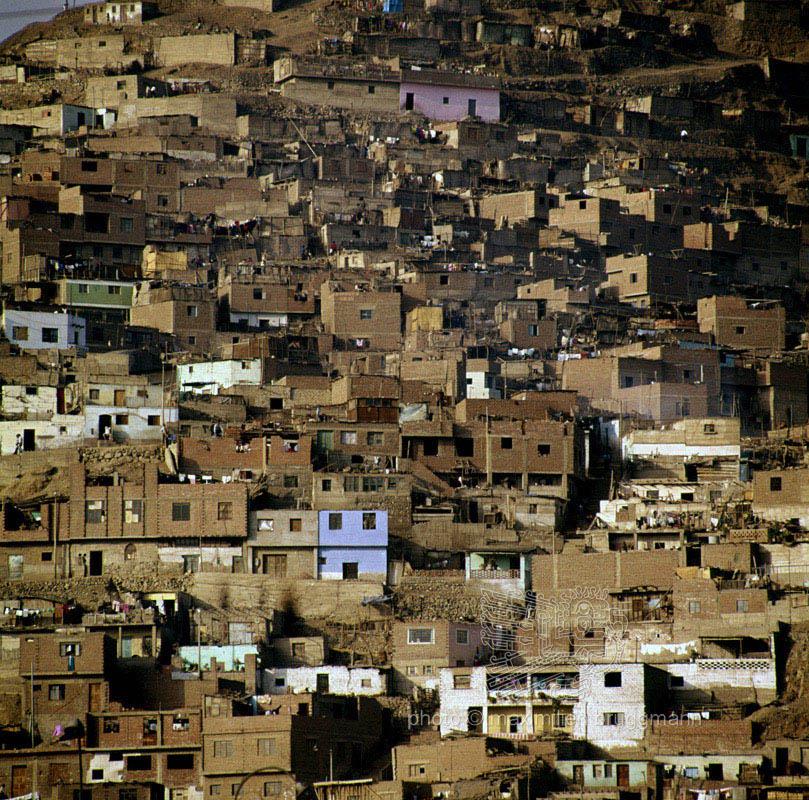
Around Peru’s capital, Lima, the pueblos jóvenes – the new neighbourhoods, also known as barriadas and which are nothing but slums – are springing up. Given the dire social situation and stagnating agriculture in the Andean valleys, the city is the main destination for a massive exodus from the countryside. - Book: Picture 187 - Peru - 1976
Lima – Ciudad de los Reyes. The City of Kings, so named because Francisco Pizarro founded it in 1535 on the Feast of the Epiphany. This illustration is taken from the book *Nueva Crónica y Buen Gobierno* by Felipe Huamán Poma de Ayala. His work contains hundreds of illustrations and was produced between 1583 and 1613. Given the scarcity of contemporary visual records, it holds a unique place; however, it must be borne in mind that the Conquista had already taken place fifty to seventy years earlier by the time Poma de Ayala set about depicting it, which is why his illustrations can only claim limited documentary value.
In the dazzling light of the waves, Inti, the Inca sun god, sinks into the waters of the Pacific … – 1969
Detail of a mummy shroud (manto) from the Paracas Necropolis culture, featuring human figures holding fans and ceremonial staffs. Museo Nacional de Antropología y Arqueología, Lima, Peru. - Book: Picture 71 - Peru - 1977