Description
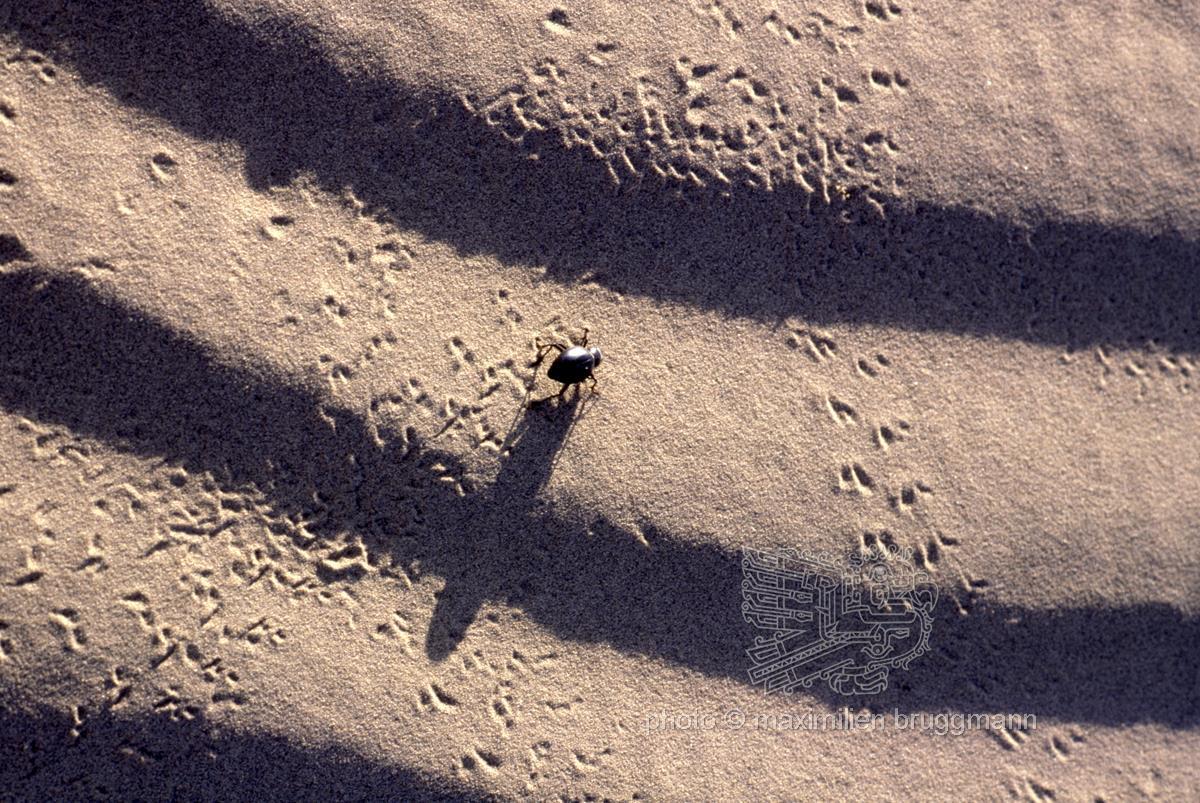
In the Thar Desert, also known as the Great Indian Desert, which stretches across northwestern India (primarily Rajasthan) and parts of Pakistan, these small creatures play a remarkable role in the ecosystem. They belong to the family of darkling beetles (Tenebrionidae). These beetles use a sophisticated method to obtain water. In the cool morning hours, they position themselves head-down on the dune crests (often referred to as fog-basking). Moisture in the air condenses on their smooth exoskeletons and flows directly into their mouthparts. As saprophages, they feed primarily on organic waste, dried plant matter, and the dung of desert animals such as camels. In this way, they maintain the nutrient cycle of the barren sand dunes. While temperatures in the Thar Desert can reach extreme levels during the day, the beetles escape the deadly heat by burrowing into the sand at lightning speed or seeking shelter under sparse vegetation. – 1990
Description
In the Thar Desert, also known as the Great Indian Desert, which stretches across northwestern India (primarily Rajasthan) and parts of Pakistan, these small creatures play a remarkable role in the ecosystem. They belong to the family of darkling beetles (Tenebrionidae). These beetles use a sophisticated method to obtain water. In the cool morning hours, they position themselves head-down on the dune crests (often referred to as fog-basking). Moisture in the air condenses on their smooth exoskeletons and flows directly into their mouthparts. As saprophages, they feed primarily on organic waste, dried plant matter, and the dung of desert animals such as camels. In this way, they maintain the nutrient cycle of the barren sand dunes. While temperatures in the Thar Desert can reach extreme levels during the day, the beetles escape the deadly heat by burrowing into the sand at lightning speed or seeking shelter under sparse vegetation. – 1990