Description
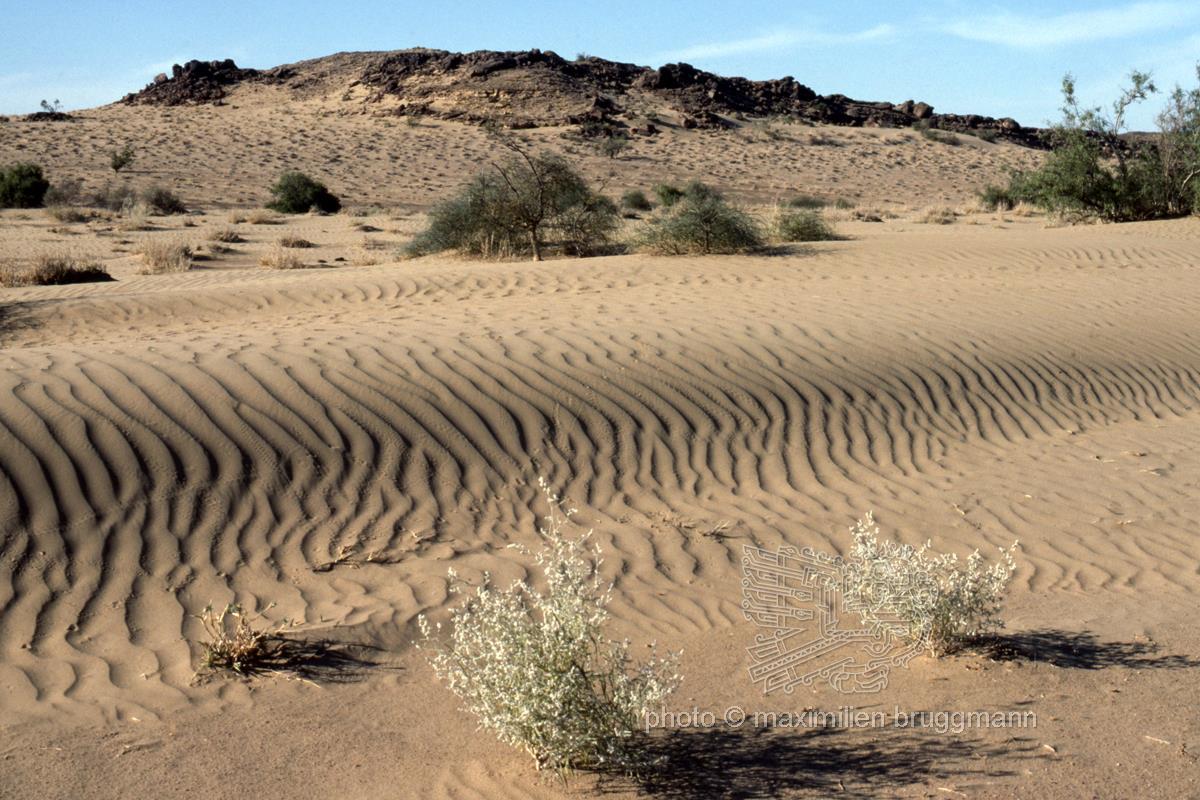
The Thar Desert stretches largely across the Indian state of Rajasthan and parts of Pakistan, and is known for its combination of various desert landscapes. The eroded, rocky hill in the background (Bhakars) is characteristic of the foothills and isolated ridges that repeatedly break through the sandy plains of the Thar. The pronounced wind ripples on the undulating dunes in the foreground reflect the sandy habitats that characterize large parts of the region. The sparse shrubs and grasses in the sand represent the typical xerophytic (drought-resistant) flora of the Thar, such as thorny shrub species (Capparis decidua or Acacia). These deep-rooted plants also serve as important soil stabilizers against wind erosion. – 1990