logo
  • Home
  • His life ...
    • Biography
    • Curriculum Vitae
    • Book: “Maximilien au Désert” NEW !
  • His work ...
    • Books
    • Expos
    • Painting
    • Embossings
    • New Year's wishesNEW !
    • Online ExhibitionsNEW !
    • Slideshows
  • Media ...
    • Documentation
    • Videos
    • Contact
  • Photo Gallery ...
    • All Photos
    • -
    • Sahara Rock Art completed
    • Tuareg
    • Pueblos
    • Northwest Indians
    • Peru
    • The culture of the Incas
    • Pre-Inca cultures
    • The Andes
    • Argentina
    • Gauchos
    • Central America
    • Sahara 1962-1975
    • Sahel
    • Sahara : Tassili - Tadrart 1993
    • From the Ténéré to the Aïr Mountains
    • In the dunes of Erg Izane
    • Across the Tamgak Mountains
    • From Adrar Bous into the Tamgak Mountains
    • With the Tuareg on the edge of the Tamgak Mountains
    • Building a Tataram: Documentation
    • The Spice Route – Spices NEW !
    • The Spice Route – Java and Sulawesi NEW !
    • The Spice Route – Moluccas NEW !
    • The Spice Route – Malaysia, Singapore and Sri Lanka NEW !
    • The Spice Route – India : Kerala, Goa and Mumbai NEW !
    • The Spice Route – India: Rajasthan NEW !
    • The Spice Route – Africa – Europe NEW !
  • Comments
    flag flag flag flag    

Description

  • Foto Number: 42N-280-16

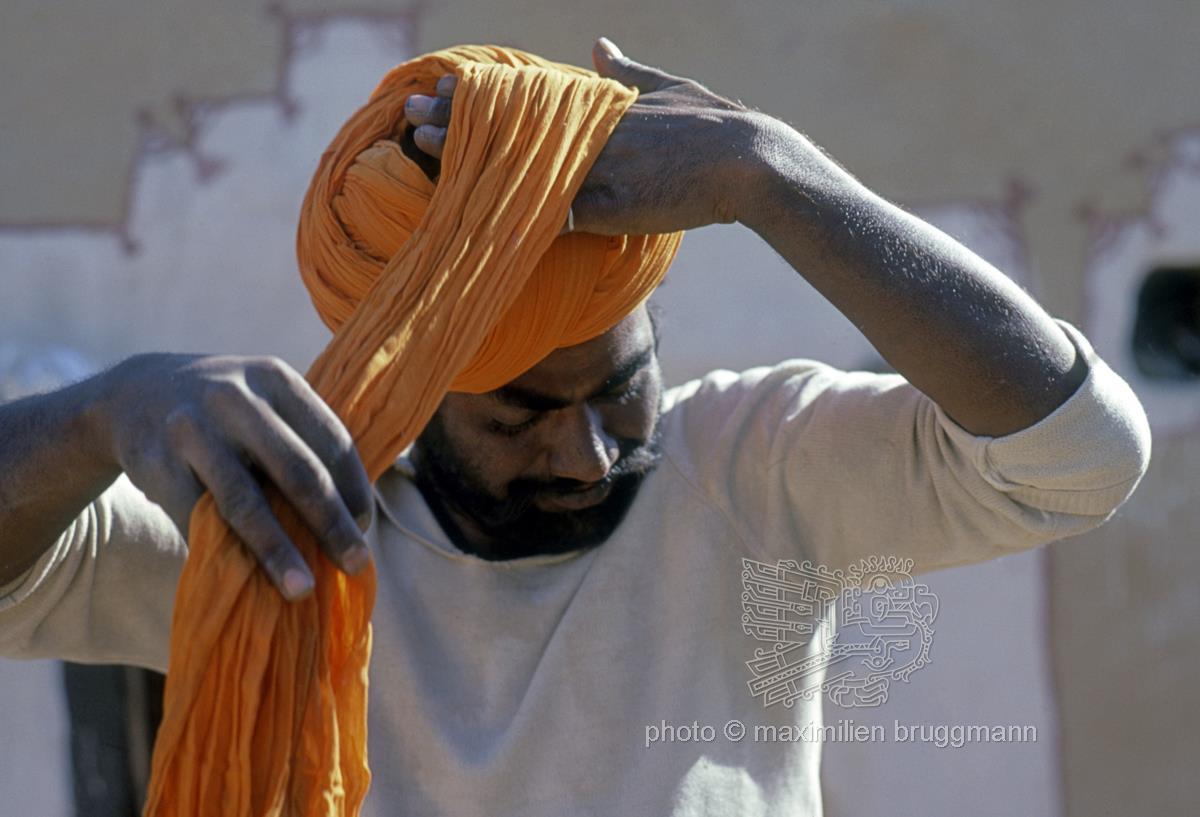
The picture shows a man tying a turban, a traditional headdress that holds deep symbolic significance in many cultures – particularly in India. The orange turban shown here is often referred to as a pagri or dastar. The bright orange colour (often called ‘kesariya’ or saffron) symbolises courage, self-sacrifice and spirituality. In Rajasthan, the wrapping techniques and colours often vary from village to village and can even indicate social status or the occasion (such as a wedding). – Khuri – 1990
  • Keywords:
    Asia India Rajasthan Thar (desert) Khuri man Turban Spice Route-F Spice Route

Description

  • Foto Number: 42N-280-16

The picture shows a man tying a turban, a traditional headdress that holds deep symbolic significance in many cultures – particularly in India. The orange turban shown here is often referred to as a pagri or dastar. The bright orange colour (often called ‘kesariya’ or saffron) symbolises courage, self-sacrifice and spirituality. In Rajasthan, the wrapping techniques and colours often vary from village to village and can even indicate social status or the occasion (such as a wedding). – Khuri – 1990

  • Keywords:
    Asia India Rajasthan Thar (desert) Khuri man Turban Spice Route-F Spice Route

Website © 2026 pb + StratLabs
Copyright © Estate of Maximilien Bruggmann for all photos. Any use for commercial purposes prohibited.
flag flag flag flag