Description
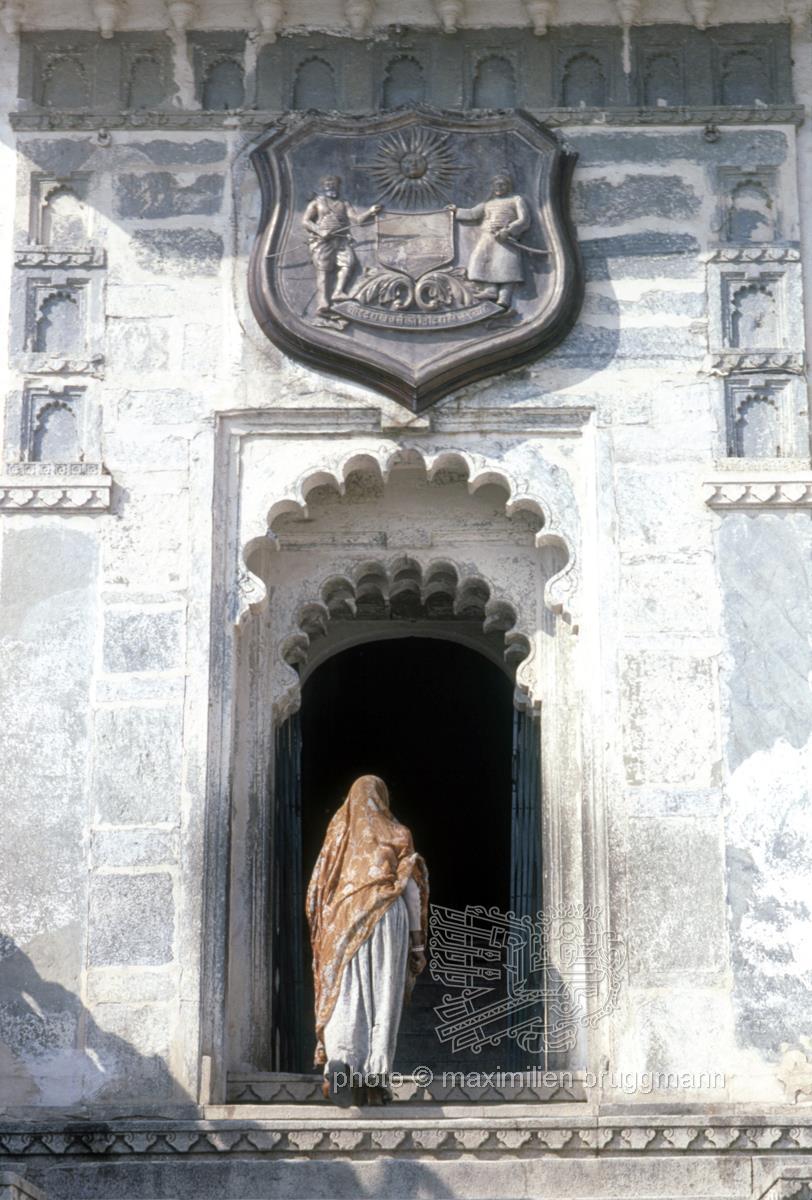
A woman steps through the ornate gateway into the City Palace in Udaipur, Rajasthan, India. Above the entrance hangs the distinctive golden coat of arms of the Mewar dynasty. The emblem is deeply rooted in Rajput history and symbolises the alliance and strength of the empire: on the left is depicted a warrior of the Bhil tribes (Rana Punja Bhil), on the right a Rajput warrior (Maharana Pratap). This symbolises the alliance between the tribal peoples and the ruling family.
Above the shield stands the Sun with a Face, the symbol of the House of Mewar, which traces its lineage back to the Sun Dynasty (Suryavansha).
At the bottom is the motto: ‘Jo dradh rakhe dharame, tahi rakhe kartar’ (He who holds fast to his faith/duty will be protected by the Creator). – 1990