Description
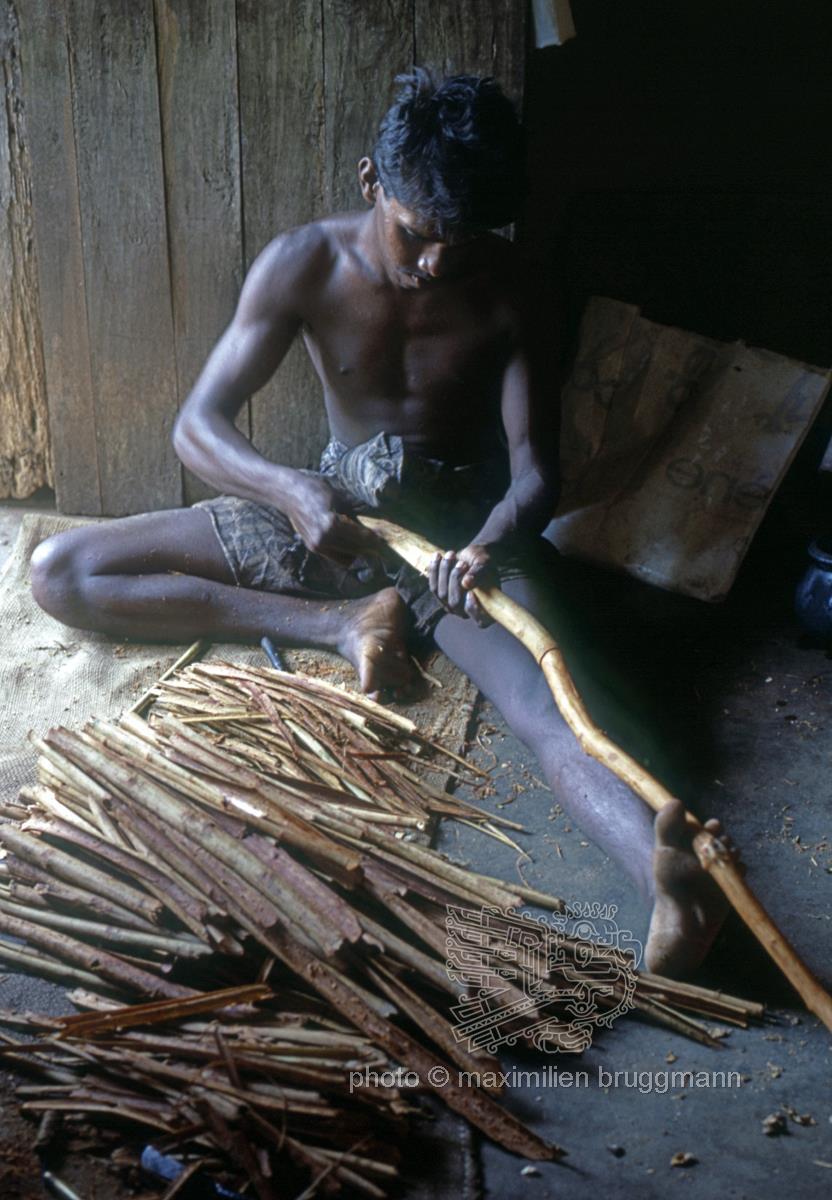
A worker in Sri Lanka produces cinnamon sticks using traditional methods. This process involves peeling the bark from the branches of the cinnamon tree (Cinnamomum verum). Cinnamon is the inner bark of this tree.
First, the outer, rough bark is scraped off the branch. The remaining bark is rubbed with a brass rod to separate it from the wood. Then, a special knife is used to peel off the thin inner bark layer in long strips. These pieces of bark are intertwined and dried, causing them to roll up into the familiar cinnamon sticks. Sri Lanka is known worldwide for its high-quality Ceylon cinnamon, also known as ‘true cinnamon’. Production is traditionally often in the hands of the Salagama caste. - 1990