logo
  • Home
  • His life ...
    • Biography
    • Curriculum Vitae
    • Book: “Maximilien au Désert” NEW !
  • His work ...
    • Books
    • Expos
    • Painting
    • Embossings
    • New Year's wishesNEW !
    • Online ExhibitionsNEW !
    • Slideshows
  • Media ...
    • Documentation
    • Videos
    • Contact
  • Photo Gallery ...
    • All Photos
    • -
    • Sahara Rock Art completed
    • Tuareg
    • Pueblos
    • Northwest Indians
    • Peru
    • The culture of the Incas
    • Pre-Inca cultures
    • The Andes
    • Argentina
    • Gauchos
    • Central America
    • Sahara 1962-1975
    • Sahel
    • Sahara : Tassili - Tadrart 1993
    • From the Ténéré to the Aïr Mountains
    • In the dunes of Erg Izane
    • Across the Tamgak Mountains
    • From Adrar Bous into the Tamgak Mountains
    • With the Tuareg on the edge of the Tamgak Mountains
    • Building a Tataram: Documentation
    • The Spice Route – Spices NEW !
    • The Spice Route – Java and Sulawesi NEW !
    • The Spice Route – Moluccas NEW !
    • The Spice Route – Malaysia, Singapore and Sri Lanka NEW !
    • The Spice Route – India : Kerala, Goa and Mumbai NEW !
    • The Spice Route – India: Rajasthan NEW !
    • The Spice Route – Africa – Europe NEW !
  • Comments
    flag flag flag flag    

Description

  • Foto Number: 41N-07-29a

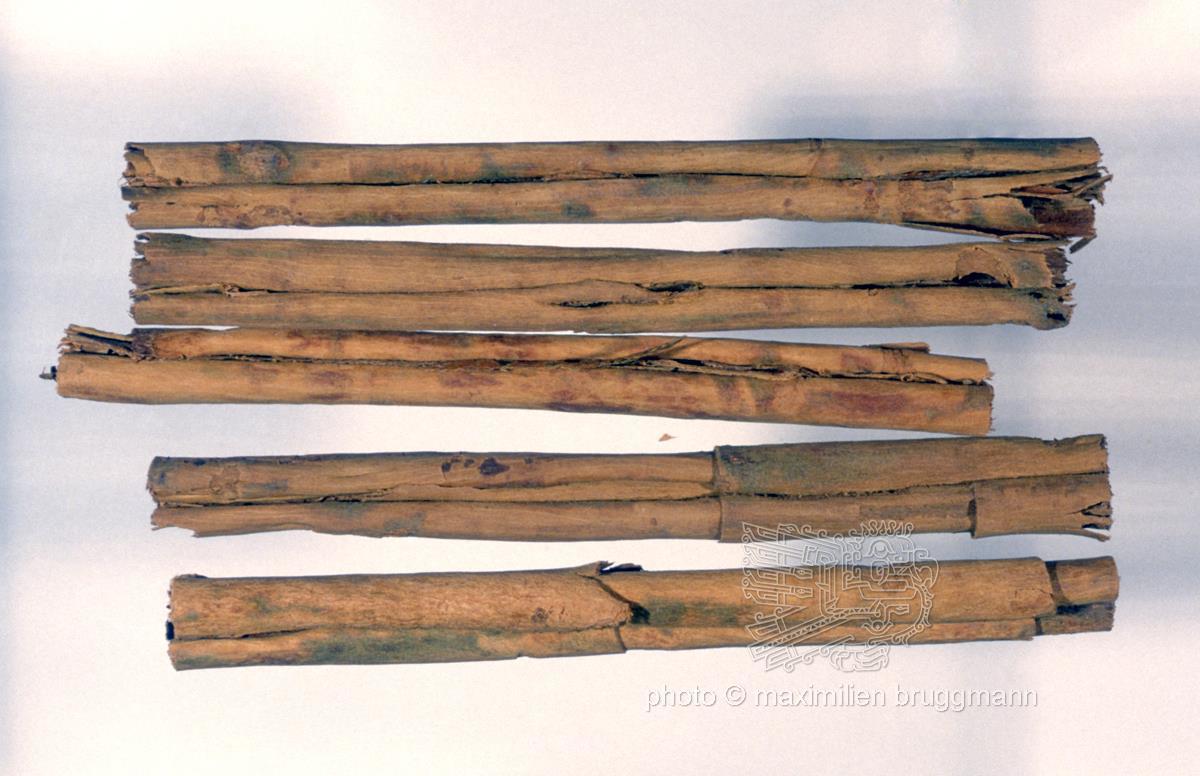
Cinnamon sticks are made from the dried bark of cinnamon trees. The type of cinnamon can be identified by its visual structure. If the sticks consist of thin, delicate layers of bark, they are Ceylon cinnamon (also called “true cinnamon”), which differs significantly from the thicker, usually single-rolled bark of Cassia cinnamon. Ceylon cinnamon comes primarily from Sri Lanka. Cassia cinnamon usually comes from China or Indonesia. Ceylon has a refined, sweet, and subtle flavor. Cassia has a sharper and more intense aroma. Ceylon cinnamon contains only very small traces of the compound coumarin. Cassia cinnamon, on the other hand, contains significantly higher amounts, which is why Ceylon cinnamon is considered safer for regular consumption in larger quantities. – 1990
  • Keywords:
    condiment cinnamon Spice Route-A Spice Route

Description

  • Foto Number: 41N-07-29a

Cinnamon sticks are made from the dried bark of cinnamon trees. The type of cinnamon can be identified by its visual structure. If the sticks consist of thin, delicate layers of bark, they are Ceylon cinnamon (also called “true cinnamon”), which differs significantly from the thicker, usually single-rolled bark of Cassia cinnamon. Ceylon cinnamon comes primarily from Sri Lanka. Cassia cinnamon usually comes from China or Indonesia. Ceylon has a refined, sweet, and subtle flavor. Cassia has a sharper and more intense aroma. Ceylon cinnamon contains only very small traces of the compound coumarin. Cassia cinnamon, on the other hand, contains significantly higher amounts, which is why Ceylon cinnamon is considered safer for regular consumption in larger quantities. – 1990

  • Keywords:
    condiment cinnamon Spice Route-A Spice Route

Website © 2026 pb + StratLabs
Copyright © Estate of Maximilien Bruggmann for all photos. Any use for commercial purposes prohibited.
flag flag flag flag