Description
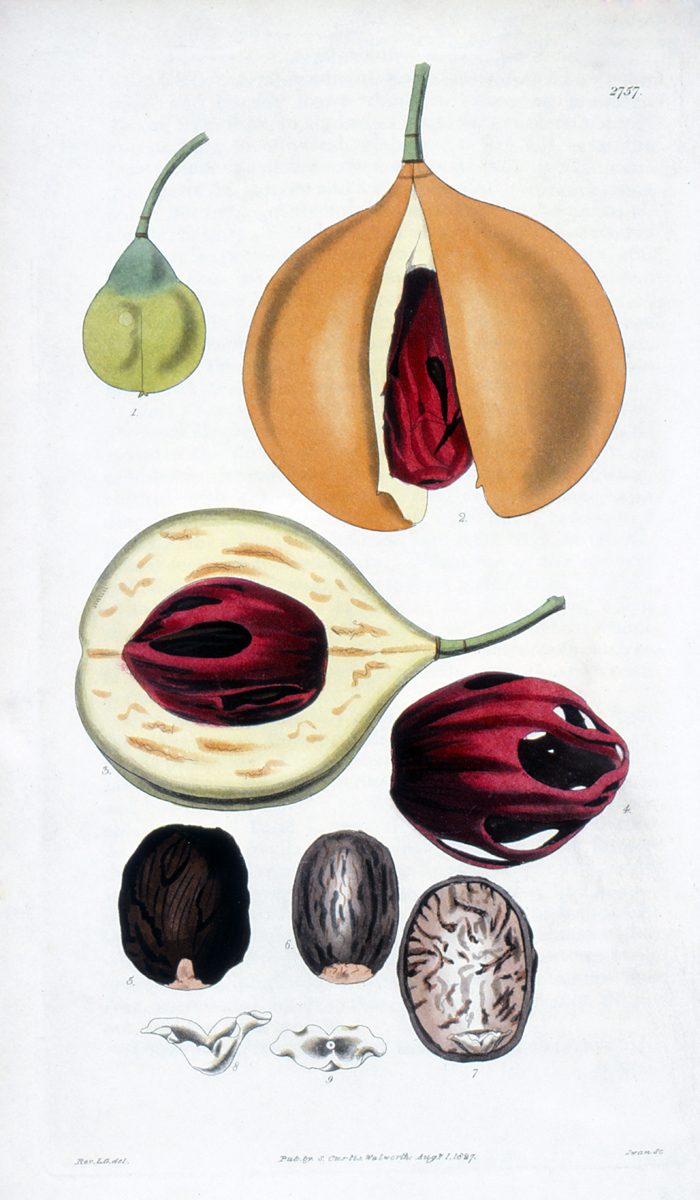
This historical botanical illustration from *The Botanical Magazine* (1827) by William Jackson Hooker depicts a ripe, split fruit of the nutmeg tree (Myristica fragrans). The thick, bright orange outer husk surrounds the seed. When the fruit is ripe, it splits open of its own accord. The two important spices obtained from a single fruit are:
Mace (mace flower): The bright red, net-like tissue (aril) visible inside the opened shell. It envelops the actual nut. When dried, it is used as a spice in its own right.
The nutmeg: The dark brown seed at the centre of the whole fruit. In the illustration, it shimmers darkly beneath the red coat of the mace.
Plate: Geneva Conservatory and Botanical Garden – 1990