logo
  • Home
  • His life ...
    • Biography
    • Curriculum Vitae
    • Book: “Maximilien au Désert” NEW !
  • His work ...
    • Books
    • Expos
    • Painting
    • Embossings
    • New Year's wishesNEW !
    • Online ExhibitionsNEW !
    • Slideshows
  • Media ...
    • Documentation
    • Videos
    • Contact
  • Photo Gallery ...
    • All Photos
    • -
    • Sahara Rock Art completed
    • Tuareg
    • Pueblos
    • Northwest Indians
    • Peru
    • The culture of the Incas
    • Pre-Inca cultures
    • The Andes
    • Argentina
    • Gauchos
    • Central America
    • Sahara 1962-1975
    • Sahel
    • Sahara : Tassili - Tadrart 1993
    • From the Ténéré to the Aïr Mountains
    • In the dunes of Erg Izane
    • Across the Tamgak Mountains
    • From Adrar Bous into the Tamgak Mountains
    • With the Tuareg on the edge of the Tamgak Mountains
    • Building a Tataram: Documentation
    • The Spice Route – Spices NEW !
    • The Spice Route – Java and Sulawesi NEW !
    • The Spice Route – Moluccas NEW !
    • The Spice Route – Malaysia, Singapore and Sri Lanka NEW !
    • The Spice Route – India : Kerala, Goa and Mumbai NEW !
    • The Spice Route – India: Rajasthan NEW !
    • The Spice Route – Africa – Europe NEW !
  • Comments
    flag flag flag flag    

Description

  • Foto Number: ZAM-245

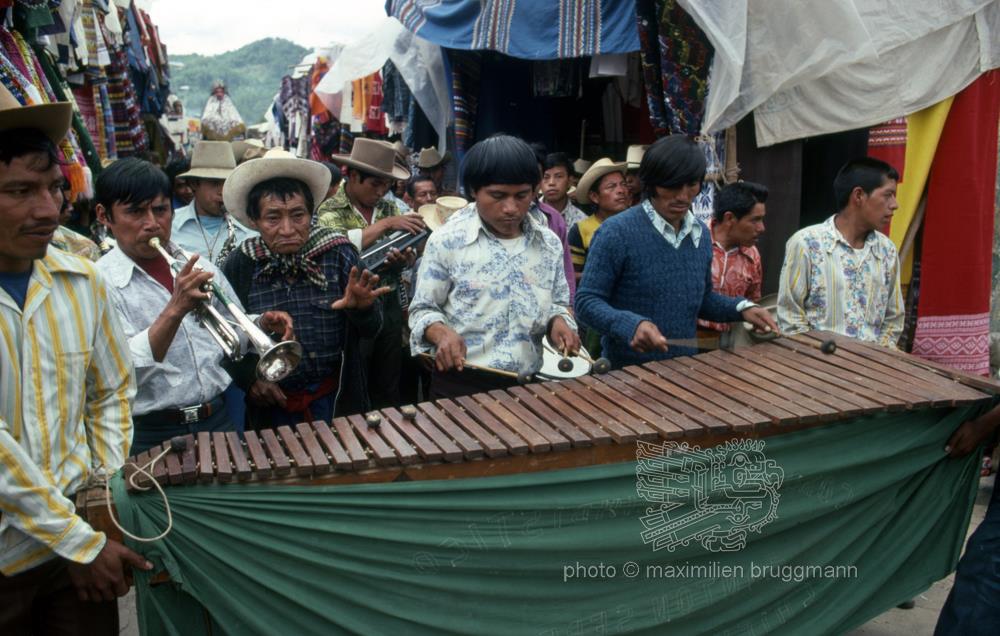
In Chichicastenango, the indigenous people celebrate the day of Santo Tomás, patron saint of this beautiful Guatemalan village, on 21 December. The marimba, a xylophone of African origin, found in most places, was probably introduced into Central America during slavery. However, it has undergone significant changes over time, both in terms of its shape and size. It is a bulky instrument with several dozen wooden keys, each with a resonance box. Two or three natives stand in front of this keyboard and strike it with small sticks. In many popular festivals, they are still accompanied by players of wind instruments such as saxophones, trumpets and trombones. These instruments, which came from Europe, were immediately adopted by the locals. - 1977
  • Keywords:
    Central America Guatemala Maya-Quiché Chichicastenango musician Aboriginal Marimba Xylophone Patronal festival procession

Description

  • Foto Number: ZAM-245

In Chichicastenango, the indigenous people celebrate the day of Santo Tomás, patron saint of this beautiful Guatemalan village, on 21 December. The marimba, a xylophone of African origin, found in most places, was probably introduced into Central America during slavery. However, it has undergone significant changes over time, both in terms of its shape and size. It is a bulky instrument with several dozen wooden keys, each with a resonance box. Two or three natives stand in front of this keyboard and strike it with small sticks. In many popular festivals, they are still accompanied by players of wind instruments such as saxophones, trumpets and trombones. These instruments, which came from Europe, were immediately adopted by the locals. - 1977

  • Keywords:
    Central America Guatemala Maya-Quiché Chichicastenango musician Aboriginal Marimba Xylophone Patronal festival procession

Website © 2026 pb + StratLabs
Copyright © Estate of Maximilien Bruggmann for all photos. Any use for commercial purposes prohibited.
flag flag flag flag