logo
  • Home
  • His life ...
    • Biography
    • Curriculum Vitae
    • Book: “Maximilien au Désert” NEW !
  • His work ...
    • Books
    • Expos
    • Painting
    • Embossings
    • New Year's wishesNEW !
    • Online ExhibitionsNEW !
    • Slideshows
  • Media ...
    • Documentation
    • Videos
    • Contact
  • Photo Gallery ...
    • All Photos
    • -
    • Sahara Rock Art completed
    • Tuareg
    • Pueblos
    • Northwest Indians
    • Peru
    • The culture of the Incas
    • Pre-Inca cultures
    • The Andes
    • Argentina
    • Gauchos
    • Central America
    • Sahara 1962-1975
    • Sahel
    • Sahara : Tassili - Tadrart 1993
    • From the Ténéré to the Aïr Mountains
    • In the dunes of Erg Izane
    • Across the Tamgak Mountains
    • From Adrar Bous into the Tamgak Mountains
    • With the Tuareg on the edge of the Tamgak Mountains
    • Building a Tataram: Documentation
    • The Spice Route – Spices NEW !
    • The Spice Route – Java and Sulawesi NEW !
    • The Spice Route – Moluccas NEW !
    • The Spice Route – Malaysia, Singapore and Sri Lanka NEW !
    • The Spice Route – India : Kerala, Goa and Mumbai NEW !
    • The Spice Route – India: Rajasthan NEW !
    • The Spice Route – Africa – Europe NEW !
  • Comments
    flag flag flag flag    

Description

  • Foto Number: KDI-095

The legends are only available in German, French or Spanish
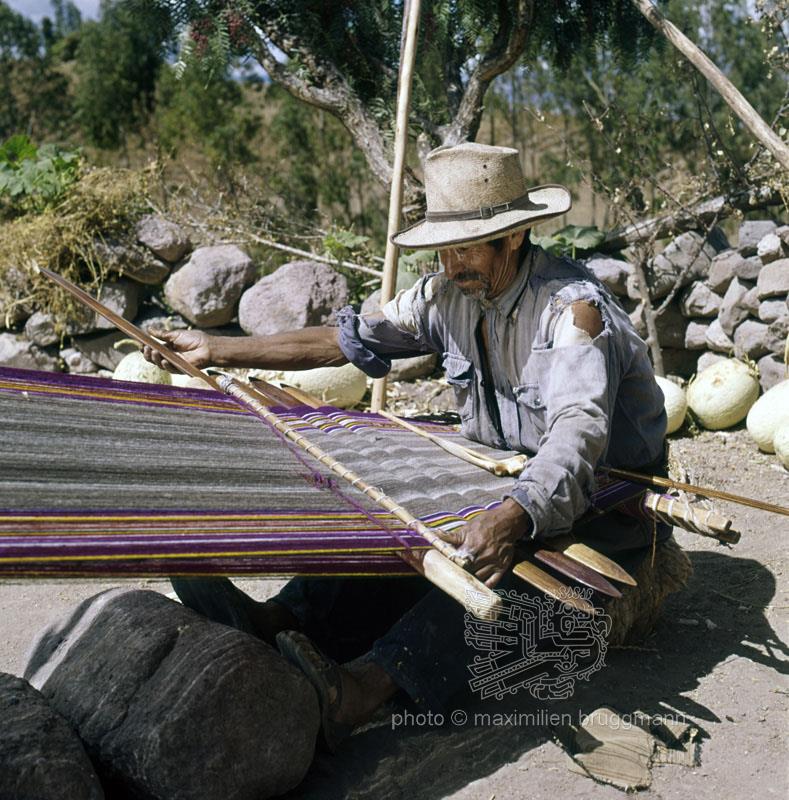
Dès lors que le cavernicole ou le chasseur nomade précolombien devient sédentaire, il tisse les fibres végétales pour se vêtir. D'abord rudimentaire, le tissage devient, avec l'apparition du coton vers 1.400 av. J.-C., un artisanat authentique. Art que cultive toujours, sur le rustique métier de bois posé à l'horizontale, ce tisserand de Quinua, près d'Ayacucho.

  • Keywords:
    South America Peru Ayacucho Quinua Piruw weaver Aboriginal Inca-Culture weaving loom

Description

  • Foto Number: KDI-095

The legends are only available in German, French or Spanish
Dès lors que le cavernicole ou le chasseur nomade précolombien devient sédentaire, il tisse les fibres végétales pour se vêtir. D'abord rudimentaire, le tissage devient, avec l'apparition du coton vers 1.400 av. J.-C., un artisanat authentique. Art que cultive toujours, sur le rustique métier de bois posé à l'horizontale, ce tisserand de Quinua, près d'Ayacucho.

  • Keywords:
    South America Peru Ayacucho Quinua Piruw weaver Aboriginal Inca-Culture weaving loom

Website © 2026 pb + StratLabs
Copyright © Estate of Maximilien Bruggmann for all photos. Any use for commercial purposes prohibited.
flag flag flag flag